
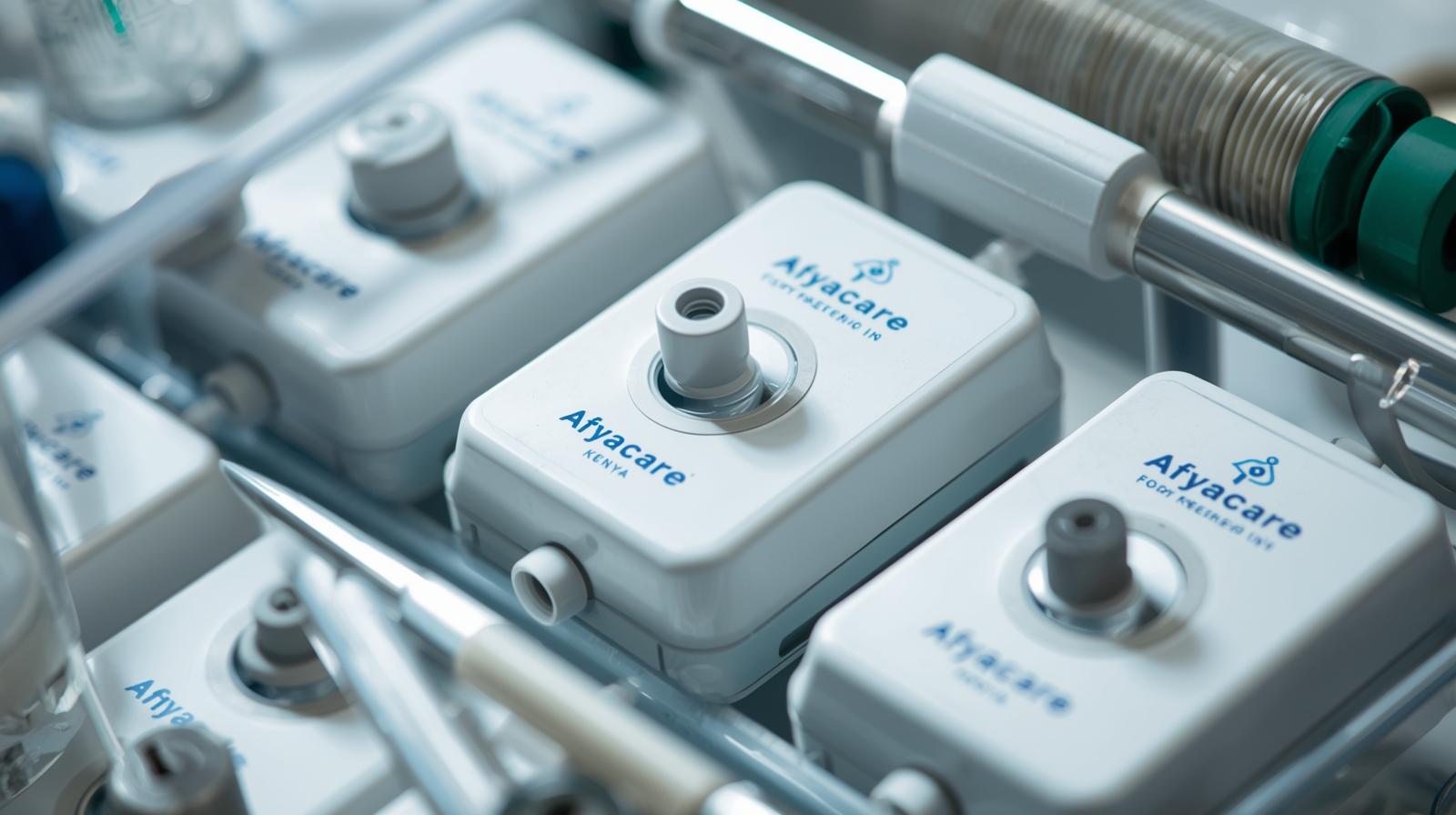
How Modern Medical Equipment Is Transforming Healthcare in Kenya : Afyacare Kenya
Introduction: A Healthcare System in Transformation
Kenya stands at a pivotal moment in the evolution of its healthcare system. Over the past decade, the country has made measurable progress on some of its most pressing health indicators. Maternal mortality has declined. Childhood immunization coverage has improved. The availability of antiretroviral therapy for people living with HIV has expanded dramatically. Life expectancy has risen. Yet alongside these achievements, the healthcare system faces a mounting set of challenges that test its capacity and ingenuity at every level.
The demographic transition is accelerating. Kenya’s population is young, urbanizing rapidly, and increasingly adopting the dietary and lifestyle patterns associated with non-communicable disease. Hypertension, diabetes, cardiovascular disease, and cancer are no longer conditions that primarily affect the wealthy or the elderly. They are mainstream clinical realities encountered in every hospital, every clinic, and every community health setting in the country. Managing this growing burden of chronic disease alongside the persistent burden of infectious illness requires a healthcare system that is not merely adequate but genuinely capable, equipped with the tools that modern medicine demands.
Technology is at the heart of that capability. Modern medical equipment is not a luxury reserved for elite hospitals in high-income countries. It is the operational foundation of any health system that aspires to diagnose accurately, treat effectively, and monitor reliably. In Kenya, the progressive introduction of modern medical technology across facilities at every level of the health system is changing what is clinically possible, transforming the experience of patients, and equipping healthcare professionals to deliver the standard of care that their training and their patients deserve.
This article explores how that transformation is unfolding. It examines the specific categories of modern medical equipment driving change in Kenya’s healthcare landscape, the measurable impact of that technology on patient outcomes, the critical importance of reliable supply partnerships in sustaining technological capability, and the role that committed companies like Afyacare Kenya are playing in making modern medical equipment accessible to healthcare facilities across the country.
Healthcare Technology Advancements: Setting the Context
To appreciate the scale of the transformation underway, it is worth pausing to consider what healthcare in Kenya looked like even twenty years ago. At the turn of the millennium, the vast majority of diagnostic investigations performed in Kenyan hospitals relied on manual methods with inherent limitations of precision, speed, and reproducibility. Blood counts were performed manually under the microscope. Biochemical analyses used colorimetric techniques that were slow and operator-dependent. Radiological imaging was largely confined to analogue X-ray at major facilities, with film processing introducing delays and quality variability that compromised diagnostic utility. Patient monitoring in wards depended almost entirely on the manual vital sign observations of nursing staff at intervals determined by staffing levels rather than clinical need.
The equipment available in most Kenyan hospitals outside the national referral tier was modest, aging, and poorly maintained. Breakdowns were frequent. Spare parts were difficult to source. Technical support was limited. The result was a diagnostic and therapeutic capability that fell significantly short of what contemporary clinical medicine required, with consequences that were measured in delayed diagnoses, missed pathology, preventable complications, and avoidable deaths.
The transformation that has occurred since then, and that continues to accelerate, has been driven by several converging forces. The global democratization of medical technology has brought equipment that was once confined to well-resourced settings in high-income countries within the financial reach of hospitals in Kenya and across sub-Saharan Africa. Digital technology has replaced analogue systems across multiple equipment categories, improving performance while reducing size, complexity, and cost. Kenya’s growing healthcare investment, both public and private, has created the capital for equipment acquisition that was largely absent a generation ago. And the emergence of professional medical equipment suppliers with genuine local presence, technical capability, and service infrastructure has made it possible to not just acquire modern equipment but to sustain it in productive clinical use.
The healthcare system that has emerged from this transformation is one in which a patient presenting to a well-equipped county hospital in Kisumu or Nakuru has access to diagnostic and therapeutic capabilities that would have been recognizable only in the best-resourced institutions in Nairobi two decades ago. That is a genuine achievement, and it is one that will continue to compound as investment in medical technology deepens and as the supply infrastructure supporting that technology matures.
The Role of Diagnostic Equipment in Modern Medicine
Diagnosis is the foundation of clinical medicine. Before a patient can be treated effectively, the nature, severity, and extent of their condition must be understood with sufficient precision to guide appropriate management. Diagnostic equipment is the technology through which that understanding is reached, and the quality of the diagnostic equipment available to a clinician directly determines the quality of the diagnostic conclusions they can draw.
Modern diagnostic equipment has transformed clinical practice in Kenya across multiple dimensions simultaneously. The speed of diagnosis has accelerated dramatically. Where laboratory results once took hours or days, modern analyzers generate results in minutes. Where radiological reports once required film processing and manual interpretation, digital imaging platforms produce images instantly and support real-time clinical decision-making. This acceleration is not merely operationally convenient. In conditions where time-to-diagnosis determines treatment eligibility and clinical outcome, it is the difference between effective intervention and irreversible harm.
The accuracy of diagnosis has improved correspondingly. Modern blood pressure monitors eliminate the observer variability inherent in manual auscultatory technique, producing consistent, reproducible readings that provide a reliable basis for hypertension diagnosis and management decisions. Digital electrocardiographs incorporate sophisticated signal processing algorithms that reduce artefact, improve waveform quality, and support computer-assisted interpretation that helps clinicians identify subtle abnormalities that might be missed in a manual reading. Modern glucometers calibrated to ISO standards produce blood glucose measurements accurate to within clinically acceptable tolerances across the physiological range encountered in diabetic management.
The clinical reach of diagnostic technology has expanded to encompass conditions and patient populations that were previously underdiagnosed in Kenya. Pulse oximetry, now widely available in ward and outpatient settings, has transformed the identification and monitoring of hypoxaemia in respiratory illness, a particular benefit in the management of pneumonia, which remains among the leading causes of childhood mortality in Kenya. Point-of-care diagnostic platforms for malaria, HIV, tuberculosis, and group A streptococcal infection have brought laboratory-quality diagnostic results to settings without laboratory infrastructure, enabling treatment decisions at the first point of clinical contact rather than after referral delays.
For Kenya’s growing non-communicable disease burden, the availability of reliable diagnostic equipment is particularly transformative. Hypertension affects a substantial proportion of Kenya’s adult population, yet estimates suggest that the majority of cases remain undiagnosed. Reliable blood pressure monitoring infrastructure, deployed at scale across primary care facilities, has the potential to dramatically reduce the proportion of hypertensives who remain undiagnosed and therefore untreated. The same logic applies to diabetes, where reliable glucometry and HbA1c testing infrastructure enables the systematic identification of undiagnosed cases and the effective monitoring of those already in treatment. Cardiovascular disease, the leading cause of mortality in most high-income countries and a growing contributor to mortality in Kenya, depends on electrocardiography, echocardiography, and cardiac biomarker testing for its timely diagnosis and appropriate management.
The transformation in diagnostic capability enabled by modern equipment is therefore not merely a technological achievement. It is a public health intervention of the first order, with the potential to shift the distribution of disease diagnosis towards earlier, more treatable stages across the full range of conditions that burden Kenya’s population.
Importance of Laboratory and Imaging Equipment
Medical laboratories and radiology departments are the institutional embodiments of diagnostic technology. They are the settings in which clinical samples and imaging data are processed into the objective information that drives clinical decision-making, and the quality of the equipment deployed within them determines the quality of every test result and every image that emerges from their work.
Kenya’s medical laboratory sector has undergone significant modernization in recent years. Modern haematology analyzers that perform complete blood counts with five-part differential white cell analysis on hundreds of samples per hour have replaced manual microscopic methods in most hospital laboratories. Modern biochemistry analyzers that measure dozens of analytes simultaneously from a single sample with a level of precision and reproducibility that manual colorimetric methods cannot approach have transformed the speed and reliability of metabolic, liver function, renal function, and endocrine testing. Modern microbiological platforms including automated blood culture systems, molecular amplification platforms for tuberculosis and HIV viral load testing, and automated sensitivity testing systems have revolutionized infectious disease diagnosis and management.
These advances have direct clinical consequences. The management of sepsis, one of the leading causes of ICU mortality in Kenya as worldwide, depends critically on rapid and reliable bacteriological culture and sensitivity data to guide antibiotic selection. The management of tuberculosis, a disease with high prevalence in Kenya and increasingly complex drug-resistance patterns, has been transformed by molecular diagnostic platforms that detect Mycobacterium tuberculosis directly from sputum within hours and simultaneously identify the major resistance mutations that determine treatment regimen selection. The management of HIV, including the monitoring of treatment efficacy through viral load testing, depends on sophisticated laboratory platforms that produce the quantitative virological data on which treatment decisions are based.
Medical imaging technology has been equally transformative. Digital X-ray systems have replaced analogue film-based radiography in a growing proportion of Kenyan facilities, delivering improvements in image quality, radiation dose reduction, workflow speed, and the ability to store, transmit, and share images digitally. The clinical benefits are experienced most directly in the core applications of chest radiography, which remains the primary imaging investigation for tuberculosis, pneumonia, cardiac failure, and thoracic malignancy in Kenyan hospitals.
Ultrasound technology has perhaps had the most democratizing effect of any imaging modality in the Kenyan context. The availability of portable, affordable, high-quality ultrasound machines has brought real-time imaging capability to facility levels where it was previously inaccessible. Obstetric ultrasound has become progressively more widely available at primary and secondary care levels, enabling the identification of high-risk pregnancies and the detection of complications including placenta praevia, foetal malpresentation, and intrauterine growth restriction at stages when clinical intervention can change outcomes. Abdominal ultrasound enables the diagnosis of the full range of hepatobiliary, renal, and pelvic pathology that presents to general hospitals across Kenya without requiring referral to specialist imaging centres.
CT scanning capability, once the preserve of national referral hospitals, is progressively becoming available at county and large private hospital level, enabling the assessment of head injuries, stroke, abdominal emergencies, and cancer staging that previously required time-consuming and clinically risky patient transfers. As the economics of CT technology continue to improve and as the evidence base for CT-guided clinical decision-making in common conditions grows, the penetration of this modality into Kenya’s secondary and tertiary hospital sector will continue to expand.
The laboratory and imaging infrastructure that modern equipment enables is the diagnostic backbone of a functional healthcare system. Its progressive strengthening across Kenya’s facility network is a foundational investment in the country’s clinical capability with returns that compound across every clinical specialty and every patient population.
Impact of Technology on Patient Outcomes
The clinical case for investing in modern medical equipment ultimately rests on its measurable impact on the outcomes of the patients who receive care with it. That impact is real, substantial, and documented across the spectrum of conditions that modern medical technology is deployed to address.
Early diagnosis and its consequences represent the most fundamental pathway through which modern technology improves outcomes. The relationship between stage at diagnosis and probability of cure or effective management is well-established across multiple disease categories. Breast cancers detected by mammography at stage one have dramatically better survival outcomes than those presenting clinically at stage three or four. Colorectal cancers identified during colonoscopy as precancerous adenomas are treatable with endoscopic resection rather than major surgery. Hypertension identified in a primary care setting and managed with lifestyle intervention and medication prevents the strokes, heart attacks, and renal failure that untreated hypertension causes over years and decades.
Continuous monitoring and clinical safety represent a second major pathway. Modern patient monitoring equipment maintains a continuous watch over the physiological parameters that reveal a patient’s clinical status, detecting deterioration the moment it begins rather than after it has progressed to a point where effective intervention is compromised. Studies across multiple healthcare settings consistently demonstrate that the availability of continuous vital sign monitoring with automated alarm functionality is associated with lower rates of unplanned cardiac arrest, fewer unplanned ICU admissions, shorter hospital stays, and lower in-hospital mortality. For Kenyan hospitals managing high volumes of acutely ill patients with nursing ratios that make one-to-one continuous bedside observation impossible, monitoring technology that extends the clinical team’s surveillance capability is a genuine patient safety intervention.
Precision in treatment delivery is a third dimension of technological impact on outcomes. Modern infusion pumps deliver intravenous medications including vasopressors, insulin, heparin, and opioid analgesics at the precise rates and volumes that narrow therapeutic windows demand, eliminating the dosing variability of manual drip-counting methods. Modern electrosurgical units provide the energy control and tissue selectivity that enables surgeons to work with precision and minimize collateral thermal injury. Modern anaesthesia workstations monitor the depth of anaesthesia continuously and provide the ventilatory control that protects the lung from the injury that inappropriate ventilator settings can cause.
Patient experience and confidence are outcomes in their own right that modern technology improves. Patients who are cared for in environments equipped with modern, functional technology experience the care they receive as more competent, more organized, and more reassuring. This perception is not merely psychological. It reflects a genuine reality: equipment that works correctly, that produces reliable results, and that is maintained to clinical standards creates a care environment that is objectively safer and more effective than one operating with inadequate or unreliable tools.
The Importance of Reliable Medical Equipment Suppliers
Modern medical equipment can only deliver its transformative potential when it is available, functional, properly maintained, and supplied within a reliable infrastructure that ensures continuity of both equipment performance and consumable supply. The quality of the medical equipment supplier is therefore not a secondary or administrative consideration. It is a clinical variable that determines whether the investment in modern equipment translates into the patient outcomes it is capable of enabling.
Kenya’s medical equipment supply market has matured considerably, but it remains heterogeneous in quality. The range of companies operating in this space extends from large, professionally managed organizations with comprehensive product portfolios, technical expertise, and genuine service infrastructure to small traders with minimal technical capability, no maintenance capacity, and supply chains that cannot sustain consistent consumable availability. The consequences of choosing a supplier from the less capable end of this spectrum are experienced not at the moment of purchase but in the months and years that follow, when equipment requires maintenance, consumables run low, and technical problems demand expert resolution.

A reliable medical equipment supplier brings several essential qualities to the relationship that distinguish them from mere vendors. They supply equipment that is authentic, certified to applicable international standards, and registered with Kenya’s Pharmacy and Poisons Board. They employ technically qualified staff who can provide informed consultation on product selection and application. They provide professional installation, commissioning, and staff training that ensures equipment is in productive clinical use from the moment it is placed in service. They maintain service infrastructure including qualified engineers, local spare parts inventories, and preventive maintenance programs that sustain equipment performance throughout its operational life. And they build long-term partnerships with their clients oriented towards the clinical success of the facilities they serve, not merely the completion of individual sales transactions.
For healthcare administrators and procurement teams navigating the supplier landscape in Kenya, the evaluation criteria that matter extend far beyond unit price. Track record in the Kenyan market, verifiable references from established clients, regulatory compliance documentation, after-sales service capability, and the depth of technical expertise available are all dimensions of supplier quality that should inform the selection decision. The cost of choosing poorly is ultimately borne by the patients whose care depends on the equipment that supplier provides.
How Afyacare Kenya Is Equipping the Future of Healthcare
Among the medical equipment companies operating in Kenya’s healthcare supply market, Afyacare Kenya has built a distinctive position as a comprehensive, technically capable, and genuinely service-oriented partner for healthcare facilities across the country. With a product portfolio that spans every major category of medical equipment, from diagnostic instruments and patient monitoring systems to laboratory analyzers, medical imaging technology, surgical and theatre equipment, life support devices, sterilization systems, and hospital furniture, Afyacare Kenya provides hospitals and clinics with a single trusted source for the full range of their equipment needs.
The company’s approach is built on a recognition that medical equipment supply is not a transactional business. It is a clinical responsibility. Every product that Afyacare Kenya supplies to a Kenyan healthcare facility will be used on patients whose outcomes depend on that equipment performing correctly. This recognition shapes every dimension of the company’s operations, from the quality standards applied to product selection and the regulatory compliance verification required of all suppliers, to the professional installation, commissioning, and staff training provided with every major equipment deployment, and the structured preventive maintenance and after-sales service programs that sustain equipment performance over time.
Afyacare Kenya’s nationwide supply and service network ensures that the quality of equipment and support it provides is not confined to major urban centres but is accessible to healthcare facilities in all regions of the country. Whether a county hospital in a rural area needs a reliable digital X-ray system, a private clinic in Nairobi requires ICU monitoring equipment, or a community health centre is equipping a laboratory for the first time, Afyacare Kenya has the product portfolio, the technical expertise, and the service infrastructure to deliver what is needed.
The role that companies like Afyacare Kenya play in Kenya’s healthcare transformation is easy to underestimate because it operates behind the scenes of the more visible clinical interventions that modern equipment enables. But without the supply chain, the technical support, the training, and the maintenance infrastructure that professional equipment suppliers provide, the modern medical equipment that is transforming Kenya’s healthcare sector would progressively lose its clinical value as it aged, malfunctioned, and ultimately failed without adequate support. The supply infrastructure is as important to the transformation as the technology itself.
Conclusion: Technology, Talent, and the Future of Kenyan Healthcare
The transformation of healthcare in Kenya through modern medical equipment is not a single event. It is a process that is unfolding continuously, driven by investment, innovation, and the growing recognition across every level of Kenya’s health system that quality healthcare requires quality tools.
For healthcare professionals, the expansion of modern equipment availability means better tools with which to practice their skills, more accurate information on which to base clinical decisions, and greater confidence that the clinical interventions they undertake will achieve the outcomes they are designed to deliver. For patients, it means earlier diagnosis, more effective treatment, and better prospects for recovery and long-term health. For healthcare students, it means entering a profession that is increasingly equipped to match the training they receive with the technology that training assumes. For investors, it means a healthcare sector that is becoming more capable, more credible, and more competitive for the private patients and health system contracts that reward genuine clinical quality.
The journey is far from complete. Significant gaps in equipment availability, quality, and maintenance remain across many parts of Kenya’s healthcare system, particularly in rural and underserved areas. Closing those gaps requires sustained investment, effective policy, strong supply partnerships, and the ongoing commitment of every stakeholder in Kenya’s healthcare ecosystem to the principle that every patient, regardless of where they live or what facility they can access, deserves care that is delivered with the best available tools.
Modern medical equipment is the means through which that commitment is expressed in clinical practice. Investing in it, maintaining it, and supporting the supply infrastructure that sustains it is not merely a healthcare spending decision. It is a statement about the value placed on human life and health in a country that has the resources, the talent, and the ambition to build a healthcare system worthy of its people.