
“Is That Mold?” — 12 Warning Signs You Have a Mold Problem in Your Kenyan Home (And What to Do Next)- MoldGuard Kenya
By MoldGuard Kenya | Kenya’s Leading Mold Removal Specialists
Published: March 2025 | Reading Time: ~11 minutes
You have repainted the bathroom ceiling twice this year. The kids have been coughing since the rainy season ended. There is a faint smell in the spare bedroom that you cannot quite name — not quite dirty socks, not quite wet concrete, but somewhere uncomfortably in between.
You are starting to wonder: do I have a mold problem?
It is a question we receive dozens of times each week at MoldGuard Kenya. And the honest answer is this — mold is far more common in Kenyan homes than most people realise, it grows in places you would never think to look, and by the time you can see it clearly, it has usually been growing quietly for weeks or even months.
This guide walks you through 12 clear warning signs that mold is present in your home, explains why each sign matters in Kenya’s specific climate, and tells you exactly what to do the moment you spot them. Whether you are a homeowner in Nairobi, a tenant in Mombasa, or renting a flat anywhere in between, this information could protect both your health and your wallet.
Why Mold Is So Easy to Miss in Kenyan Homes
Before we get into the warning signs, it helps to understand one thing that makes mold uniquely tricky in Kenya: most of it is hidden.
Mold does not always appear as the dramatic black wall-covering you might imagine. More often, it is growing silently inside your walls, underneath your floor tiles, behind your bathroom fittings, above your ceiling boards, or inside the cavity behind a kitchen cupboard. It feeds on the moisture trapped in building materials and can establish a thriving colony before a single visible spot appears on your surfaces.
Kenya’s climate makes this worse. The two annual rainy seasons — March to May and October to December — push persistent dampness into building materials through even the tiniest roof defects, wall cracks, and poorly sealed window frames. In coastal towns like Mombasa, Malindi, and Kilifi, ambient humidity is high enough year-round to sustain mold growth without any rainfall at all. And in densely built apartment blocks in Nairobi, poor cross-ventilation means that everyday moisture from cooking, bathing, and even breathing accumulates in walls and ceilings with nowhere to escape.
The result? A mold problem that is growing in your home right now might reveal itself not through a visible patch on your wall, but through subtler clues — a smell, a health symptom, a change in how your walls look or feel. Learning to read those clues is the first step.
The 12 Warning Signs of Mold in Your Home
Sign 1: A Persistent Musty or Earthy Smell
This is the most reliable early warning sign of a mold problem, and it is the one most Kenyans dismiss or get used to.
Mold produces gases called microbial volatile organic compounds (MVOCs) as it digests organic material. These gases create a distinctive smell — described variously as musty, earthy, like damp soil after rain, like wet old books, or faintly like rotting wood. It is often strongest in enclosed spaces: a wardrobe, a cupboard under the sink, a bathroom with the door closed, or a bedroom that has been shut up for a few days.
The tell-tale test: Open a room or cupboard that has been closed overnight and take a deep breath. If there is a faint unpleasant odour that you cannot attribute to anything visible, trust your nose. Smell is often the earliest indicator of hidden mold by several weeks.
In Kenya specifically: Many tenants and homeowners assume this smell is just “how old buildings smell” or write it off as general dampness. It is not. A healthy, well-maintained home should not smell musty, even during the rainy season.
Sign 2: Dark, Fuzzy, or Discoloured Patches on Walls or Ceilings
This is the obvious one — and yet it is frequently misidentified.
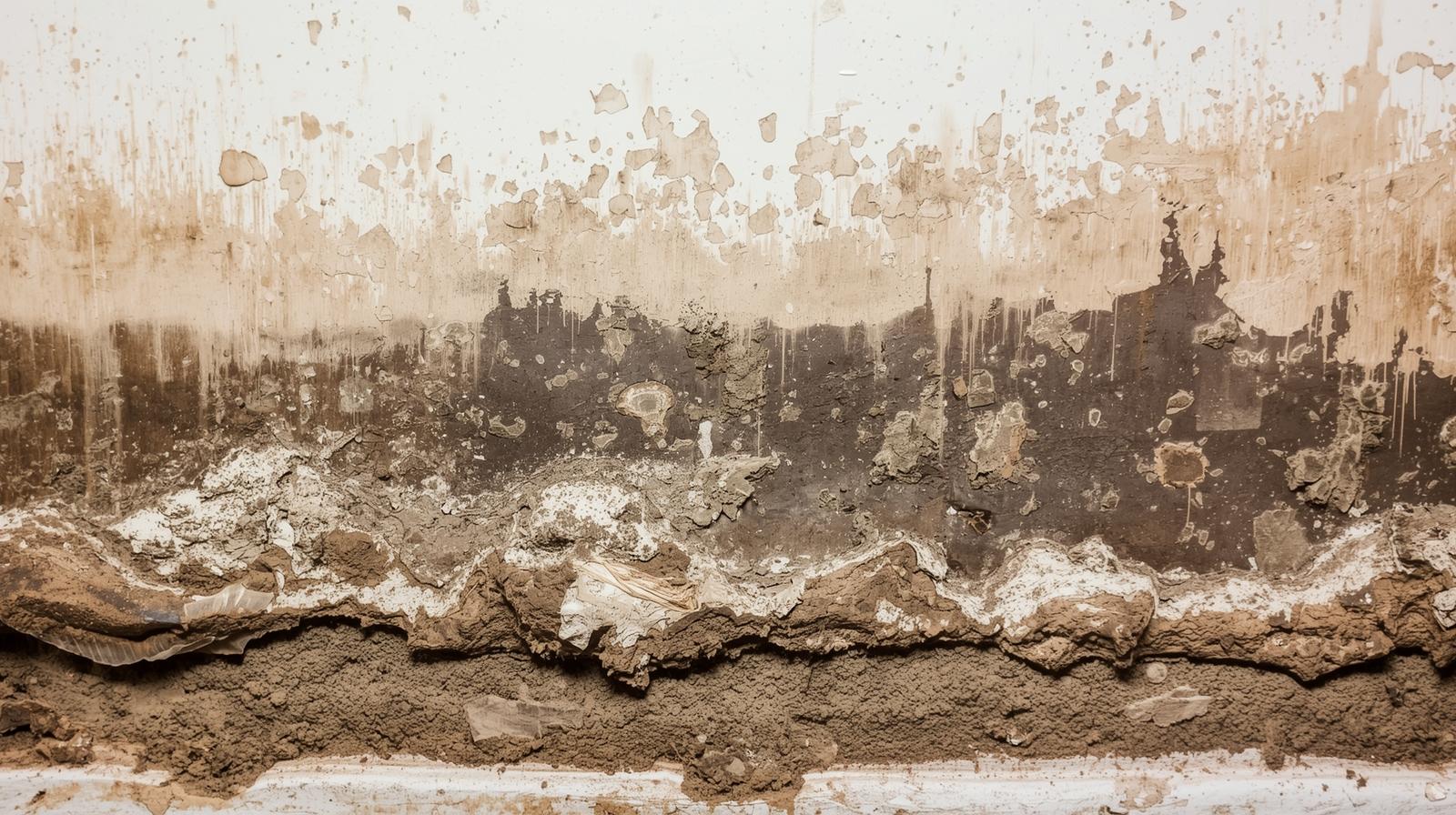
Mold patches can appear black, dark green, grey, brown, or even reddish. They are often fuzzy or slightly raised in texture, and they tend to appear first in corners, along grout lines, on ceiling edges near walls, or on surfaces that stay damp longer than others. Many people mistake early-stage mold for general discolouration, grime, or shadows — especially in poorly lit rooms.
What to look for: Pay particular attention to the corners of bathroom ceilings, the grout lines between bathroom tiles, the ceiling directly below a water tank or air conditioning unit, the wall behind large furniture like wardrobes that are pushed flush against the wall, and around window frames and sills.
A simple test: If a dark patch wipes away completely when you clean it but reappears within a week or two in the same spot, you are almost certainly dealing with mold, not ordinary dirt.
Sign 3: Paint That Keeps Peeling, Bubbling, or Cracking
If you have repainted a wall and the new paint is already blistering or peeling away from the surface, moisture is almost certainly trapped behind it — and where there is trapped moisture in a warm Kenyan home, mold is very likely present.
This happens because mold and the moisture feeding it create vapour pressure that physically pushes paint away from the underlying surface. No matter how many times you repaint over the top without treating the root cause, the paint will keep failing.
In Kenya specifically: This is one of the most common signs we encounter in Nairobi apartment buildings, particularly in units on upper floors where roof leaks have been dripping into walls for a long time before being repaired, and in ground-floor units where rising damp from poorly sealed foundations is a chronic issue.
Sign 4: Water Stains, Yellow-Brown Marks, or Tide Lines
Yellow, brown, or grey stains on walls and ceilings — particularly those with a ring-like “tide mark” appearance — are the footprints of water that has repeatedly soaked into a surface and dried out. These stains tell you that a moisture problem either exists or has existed in that location.
Even if the original leak has been repaired, a stained area that was left wet for any length of time almost certainly has mold established within the wall or ceiling material behind it. The stain you can see is the surface evidence; the mold you cannot see is what matters.
Where to look: Check the ceiling directly below a bathroom or kitchen on the floor above, around every window frame (both inside and out), along the tops of exterior-facing walls, and near any area where a pipe runs through the wall.
Sign 5: Walls, Floors, or Ceilings That Feel Damp, Soft, or Spongy
Run your palm flat across your walls. They should feel firm and dry. If any section feels slightly soft, spongy, warm to the touch, or noticeably damp — even when the weather has been dry for a while — moisture is trapped inside the building material, and mold is very likely actively growing within it.
In extreme cases, drywall or plaster that has been saturated for long enough will visibly bulge or bow outward under the pressure of moisture and internal mold growth. Wooden window frames, door frames, or skirting boards that feel soft or yield to light pressure are also a strong indicator of internal mold damage.
Sign 6: Rust or Staining Around Nails, Screws, or Metal Fittings
If you notice rust-coloured streaks or staining around nails, screws, curtain rail brackets, or any metal fittings in your walls, this is a sign of chronically high moisture levels in the surrounding wall material. Metal does not rust in a dry wall — it rusts when surrounded by damp building material. And damp building material in a Kenyan home is a mold breeding ground.
Sign 7: Unexplained Allergy-Like Symptoms That Improve When You Leave Home
This is one of the most important but most overlooked signs — because it shows up in your body, not on your walls.
Mold releases microscopic spores and chemical compounds continuously into the air of any room it inhabits. Breathing these in regularly causes a characteristic set of symptoms in many people: persistent sneezing, a runny or blocked nose, itchy and watery eyes, a scratchy or irritated throat, and skin that feels itchy or develops a rash. These symptoms are often mistaken for a chronic cold, a dust allergy, or “sinus problems.”
The key diagnostic clue: Do your symptoms improve noticeably when you spend time away from home — at the office, visiting family, or on a trip? And then return when you come back? If yes, something in your indoor environment is triggering them, and mold is the most likely culprit.
In Kenya specifically: Many families spend months treating what they believe are seasonal allergies or recurring colds without ever addressing the mold in their home that is actually driving the symptoms. If a family member — especially a child — seems to be permanently under the weather at home but is fine elsewhere, please take this seriously.
Sign 8: Persistent Coughing, Wheezing, or Breathing Difficulties at Home
If anyone in your household — particularly children, elderly family members, or anyone with asthma — is experiencing coughing fits, wheezing, shortness of breath, or worsening asthma symptoms that cannot be explained by an infection, mold exposure is a serious candidate.
Mold spores are potent respiratory irritants. For people with pre-existing respiratory conditions, even moderate mold exposure can trigger significant attacks. For infants and young children whose lungs are still developing, chronic mold exposure carries real long-term health risks.
What to do: If a child in your home has been prescribed asthma medication in the past year and you have not had your home inspected for mold, please arrange an inspection. Many childhood asthma cases in Kenya are significantly worsened — and sometimes triggered — by indoor mold exposure.
Sign 9: Unexplained Headaches and Fatigue That Are Worse at Home
Waking up with a headache more days than not. Feeling exhausted despite a full night’s sleep. Struggling to concentrate while working from home. These could all be signs of poor indoor air quality caused by mold — specifically, the mycotoxins that certain mold species release into the air.
Mycotoxins are toxic chemical compounds produced by molds like Stachybotrys (black mold) and certain Aspergillus species. Chronic low-level exposure can cause a constellation of symptoms that look a lot like general fatigue or stress: persistent headaches, mental fog, low energy, and difficulty concentrating.
If you feel noticeably better on days when you spend extended time outdoors or away from your home, and significantly worse on days you spend mostly indoors, your home’s air quality deserves a close look.
Sign 10: Clothes, Shoes, or Stored Items That Develop Mold or a Musty Smell
Open your wardrobe. Take out shoes you have not worn in a few weeks. Smell a jacket or jumper that has been hanging for a while. Do any of them smell musty or show spots of mold?
Mold spores actively colonise fabric, leather, and other porous materials when the ambient humidity is high enough. If your stored clothing, leather shoes, bags, or bedding in storage are developing mold or a persistent musty smell, the room or wardrobe they are stored in has a significant humidity and ventilation problem — one that is almost certainly also affecting your walls, ceiling, and floor materials.
In Kenya specifically: This sign is particularly common in ground-floor bedrooms and in apartments near the coast where high ambient humidity creates conditions where even items inside a wardrobe are persistently damp.
Sign 11: Condensation on Windows, Walls, or Cold Pipes — Indoors
Some condensation on glass windows on a cold morning is normal. But if you are regularly finding water droplets or persistent fogging on your windows, indoor walls, or cold water pipes throughout the day, your indoor humidity levels are dangerously high and mold conditions are very likely already established.
Condensation forms when warm, moisture-laden air meets a cooler surface. In a home that is generating more moisture than it is releasing through ventilation — through cooking, bathing, drying laundry indoors, or simply having many people living in a small space — condensation becomes chronic. And chronically damp surfaces in a warm Kenyan home are mold incubators.
Sign 12: Grout Lines That Turn Black, Green, or Pink and Keep Coming Back
Bathroom grout that darkens between tiles is one of the earliest and most visible signs of mold growth in a Kenyan home. Grout is porous and stays damp — the perfect combination for mold establishment.
The crucial distinction to understand: light surface discolouration on grout can sometimes be removed with a good scrub and an appropriate cleaner. But if your grout turns dark and comes back within a few weeks after cleaning, or if the discolouration is concentrated in corners, along the lower edge of walls, or around the sealant joint where the wall meets the floor — you have an active mold colony that surface cleaning alone will not eliminate.
Similarly, a pinkish-orange tinge on grout or bathroom sealant is typically caused by a mold-related organism called Serratia marcescens — a sign that biological growth is established in your bathroom surfaces.
The Places Mold Hides That You Would Never Think to Check
Beyond the signs above, mold frequently establishes itself in locations that most Kenyan homeowners and tenants never inspect:
Inside the cavity behind your shower wall. If your shower was tiled directly onto a wall and the waterproofing membrane was inadequate or has deteriorated, mold can be growing extensively inside the wall without any visible sign on the surface of the tiles.
Above your ceiling boards. Roof leaks often drip onto the top surface of ceiling boards and create extensive mold growth above the ceiling that is completely invisible from below — until the boards begin to sag, stain, or fail.
Under your kitchen sink. The combination of dark conditions, occasional drips from waste pipes or supply hoses, and limited airflow makes the interior of kitchen base cabinets a prime mold location. Check inside regularly.
Behind your refrigerator. The warmth generated by the refrigerator compressor combined with occasional condensation and food particles makes the wall and floor behind a fridge a surprisingly common mold location.
In your mattress or sofa. Ground-floor rooms with high humidity can create conditions where mold grows inside foam mattresses and upholstered furniture — invisible from the outside, but continuously releasing spores into the room air.
In air conditioning units and their drainage lines. AC units that are not serviced regularly accumulate moisture, dust, and mold in their filters and drainage pans, then blow mold spores directly into the room air every time they run.
What to Do the Moment You Spot the Signs
If you have recognised one or more of these signs in your home, here is the right course of action:
Do not panic — but do not ignore it either. A mold problem that is caught and treated early is far simpler and less costly to address than one that has been spreading inside your walls for months.
Do not attempt to scrub it away yourself. Surface cleaning with bleach or household sprays does not kill embedded mold. It removes what you can see while disturbing the colony and releasing spores into the air. If the affected area is larger than roughly 30 cm x 30 cm, professional remediation is the appropriate response.
Do not repaint over it. Paint does not kill mold. Mold will grow through new paint within weeks.
Do ventilate the space as much as possible while you arrange for a professional inspection. Open windows, run fans, and reduce moisture-generating activities in the affected area.
Do contact MoldGuard Kenya for a professional mold inspection. Our certified technicians will assess the full extent of the problem — including hidden growth behind walls and above ceilings — using professional moisture detection equipment. We then provide a clear remediation plan and transparent quote so you know exactly what needs to be done and what it will cost.
A Special Note for Renters and Tenants in Kenya
If you are renting and you have identified signs of mold in your rental unit, you have both rights and responsibilities to understand:
As a tenant in Kenya, you have the right to a habitable home. Mold caused by structural issues — a leaking roof, defective plumbing, inadequate ventilation that was present at the time of renting — is the landlord’s responsibility to address.
However: Mold caused by tenant behaviour — such as blocking ventilation, failing to report leaks promptly, or drying laundry indoors in an unventilated room for extended periods — may fall within the tenant’s responsibility.
The most important step is to document everything. Photograph any signs of mold, note the date, and report the issue to your landlord in writing (a WhatsApp message with a clear record is sufficient). This protects you legally and creates a formal record that the problem was reported.
If your landlord is unresponsive, MoldGuard Kenya can provide a written professional inspection report documenting the nature and extent of the mold problem, which can be used in formal communications with your landlord or in relevant dispute resolution processes.
When to Call MoldGuard Kenya: Your Quick Checklist
Call us for a free inspection if you can tick any of the following:
- ✅ You can smell something musty or earthy in any room, wardrobe, or cupboard
- ✅ You can see dark, fuzzy, or discoloured patches on walls, ceilings, or grout
- ✅ Your paint keeps peeling or bubbling despite repeated repainting
- ✅ You have water stains or tide marks on any wall or ceiling
- ✅ Any wall, floor, or ceiling surface feels damp or spongy
- ✅ Anyone in the household has persistent allergy or respiratory symptoms
- ✅ Stored clothes or shoes are developing a musty smell or visible mold
- ✅ You have had a roof leak, pipe leak, or flooding in the past 12 months — even if it was “fixed”
- ✅ Your home is a ground-floor unit, basement flat, or is located in a low-lying area
- ✅ Your property is older than 10 years and has never been professionally inspected for mold
If you ticked even one of the above, do not wait. Mold problems do not resolve themselves — they grow.
Frequently Asked Questions From Kenyan Homeowners and Tenants
I can only see a small patch — is it really worth calling a professional? Yes. What you see on the surface of a wall is almost never the full extent of a mold problem. Visible mold is typically the outward sign of a much larger colony established within the wall, ceiling, or floor material. Small visible patches often indicate extensive hidden growth.
I cleaned it with bleach and it looked fine for a while, but now it is back. What is happening? Bleach removes the visible surface growth but cannot penetrate deep enough into porous materials to kill the embedded root system (mycelium). The colony regrows from within. This cycle will continue indefinitely until the mold is properly remediated and the underlying moisture source is addressed.
How quickly can mold spread once it starts? Under Kenya’s warm, humid conditions, mold can begin establishing itself within 24 to 48 hours of a surface becoming wet. A small colony can double in size within a week. This is why prompt action after any water damage event is critically important.
Is mold in my home affecting my children’s health? It may well be. Children are more vulnerable to mold exposure than adults because their immune systems and lungs are still developing. If your children have unexplained respiratory symptoms, frequent colds that linger, or allergy-like symptoms at home, a mold inspection is strongly advisable.
How much does a professional mold inspection cost? MoldGuard Kenya offers free mold inspections for residential properties. There is no charge for the initial assessment and quotation. You only pay if you choose to proceed with remediation treatment.
Get a Free Mold Inspection from MoldGuard Kenya
If this article has raised any concerns about your home, do not sit on the uncertainty. A free professional inspection from MoldGuard Kenya will give you a clear, expert answer within 24 hours — and peace of mind that is worth far more than the cost of leaving a mold problem undetected.
📞 Call / WhatsApp: [Your Phone Number] 📧 Email: [Your Email Address] 🌐 Website: www.moldguardkenya.co.ke 📍 Serving Nairobi, Mombasa, Kisumu, Nakuru and all 47 counties
Same-day inspections available for urgent cases. Book yours today.
MoldGuard Kenya — Helping Kenyan Families Identify and Eliminate Mold Before It Harms Their Homes and Their Health.
More From MoldGuard Kenya:
- Mold Removal in Kenya: The Complete Guide to Protecting Your Home and Health (2025)
- How Much Does Mold Removal Cost in Kenya? 2025 Price Guide
- Black Mold in Kenya: What It Is, Where It Hides, and Why It Is So Dangerous
- The Tenant’s Guide to Mold in Rental Properties in Kenya: Rights, Responsibilities & Remedies
- Mold After the Rainy Season: Why March to May Is Kenya’s Most Dangerous Period for Mold Growth